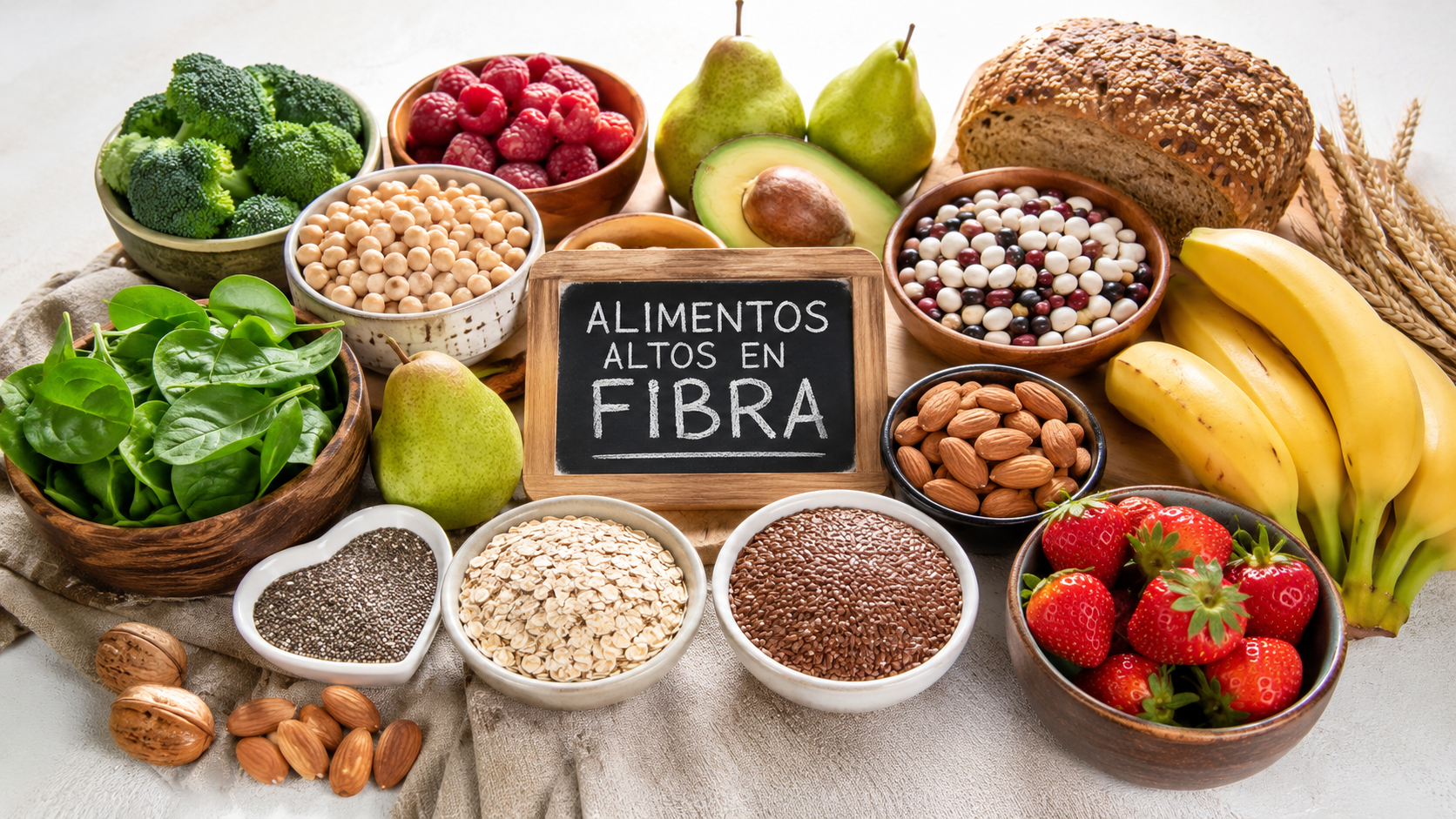
Why fiber matters so much
Fiber is the part of plant foods your body can't fully digest, yet it serves essential functions: it regulates bowel movements, feeds beneficial gut bacteria, helps control blood sugar, and increases satiety, making it easier to maintain a healthy weight.
Despite this, most people in developed countries consume less than half the recommended daily fiber.
💡 Fiber feeds the good bacteria in your gut, which in turn produce compounds that reduce inflammation and improve metabolic health.
How much fiber do you need per day?
General recommendations for adults are:
| Group | Recommended daily fiber |
|---|---|
| Adult women | 25 g |
| Adult men | 30 – 38 g |
| Very active people or higher food volume | 35 – 45 g |
Soluble vs. insoluble fiber
There are two main types of fiber, and both are needed:
- Soluble fiber: dissolves in water forming a sort of gel. Helps control cholesterol and blood sugar. Found in oats, legumes, apples and chia seeds.
- Insoluble fiber: doesn't dissolve and adds bulk to stool, improving bowel movement. Found in wheat bran, leafy greens and nuts.
Foods with the most fiber
Legumes
- Cooked lentils — 8 g of fiber per 100 g
- Cooked black beans — 8.7 g per 100 g
- Cooked chickpeas — 7.6 g per 100 g
Grains and seeds
- Chia seeds — 34 g per 100 g, one of the most concentrated sources that exist
- Oats — 10 g per 100 g raw
- Cooked quinoa — 2.8 g per 100 g
Fruits and vegetables
- Raspberries — 6.5 g per 100 g
- Avocado — 6.7 g per 100 g
- Cooked artichoke — 5.4 g per 100 g
- Pear with skin — 3.1 g per 100 g
- Cooked broccoli — 3.3 g per 100 g
Wondering if eating fruit is compatible with losing weight? We answer that in detail in our article on whether fruit makes you fat.
How to increase your fiber without bloating
Increasing fiber too fast is the most common mistake and the main cause of gas and bloating. Your gut needs time to adapt. Follow these steps:
- Increase your fiber intake gradually, in steps of 5 g every few days.
- Drink more water as you increase fiber: without enough fluid, fiber can have the opposite effect and cause constipation.
- Spread fiber across several meals a day instead of concentrating it in one.
🎯 Practical tip: add a spoonful of chia seeds or ground flaxseed to your morning yogurt or smoothie. It's one of the easiest ways to add fiber without overhauling your diet.
Frequently asked questions
Does fiber help with weight loss?
Yes, indirectly. Fiber increases satiety and slows digestion, which naturally helps you eat less and keeps blood sugar more stable between meals.
Can you have too much fiber?
Consuming much more fiber than needed without increasing water intake can cause bloating, gas or digestive discomfort. It can also slightly interfere with the absorption of some minerals if the excess is very large and sustained over time.
Are fiber supplements as good as fiber from food?
They can be useful as occasional support, but whole foods also provide vitamins, minerals and beneficial plant compounds that an isolated supplement doesn't offer. Whenever possible, prioritize fiber from real food.
Track your daily fiber without the hassle
With Comeloia you can see at a glance how much fiber, protein and calories you've had in a day just by photographing your meals.


Summary: what to remember
- Aim for 25-38 g of fiber a day, depending on your sex and activity level.
- Combine soluble and insoluble fiber: legumes, oats, fruit with skin and vegetables.
- Increase the amount gradually and drink more water to avoid discomfort.
- Prioritize whole foods over isolated fiber supplements.
- Fiber is your ally for satiety and long-term weight control.
← Back to blog